How Long Does Fire Damage Restoration Take?
Fire damage restoration can take a few days or the better part of a year. Here is the realistic timeline stage by stage, what makes it longer, how insurance inspections fit in, and what actually shortens the schedule.
Key Answer & Essential Rule
Most fire damage restoration projects take between one week and nine months. Light smoke and soot cleanup in one or two rooms is often finished in 3 to 10 days. A moderate loss with firefighting water damage and partial demolition usually runs 3 to 8 weeks. A major fire requiring permitted structural reconstruction commonly takes 4 to 9 months from the day the fire department releases the scene. Mitigation moves fast; the rebuild phase and insurance approvals are what stretch the calendar.
How Long Does Fire Damage Restoration Take?
The honest answer to how long does fire damage restoration take is that it depends far less on the size of your home than on how deep the damage runs. Two houses with identical square footage can finish months apart, because one needed surfaces cleaned and the other needed framing replaced, permits pulled, and city inspections passed.
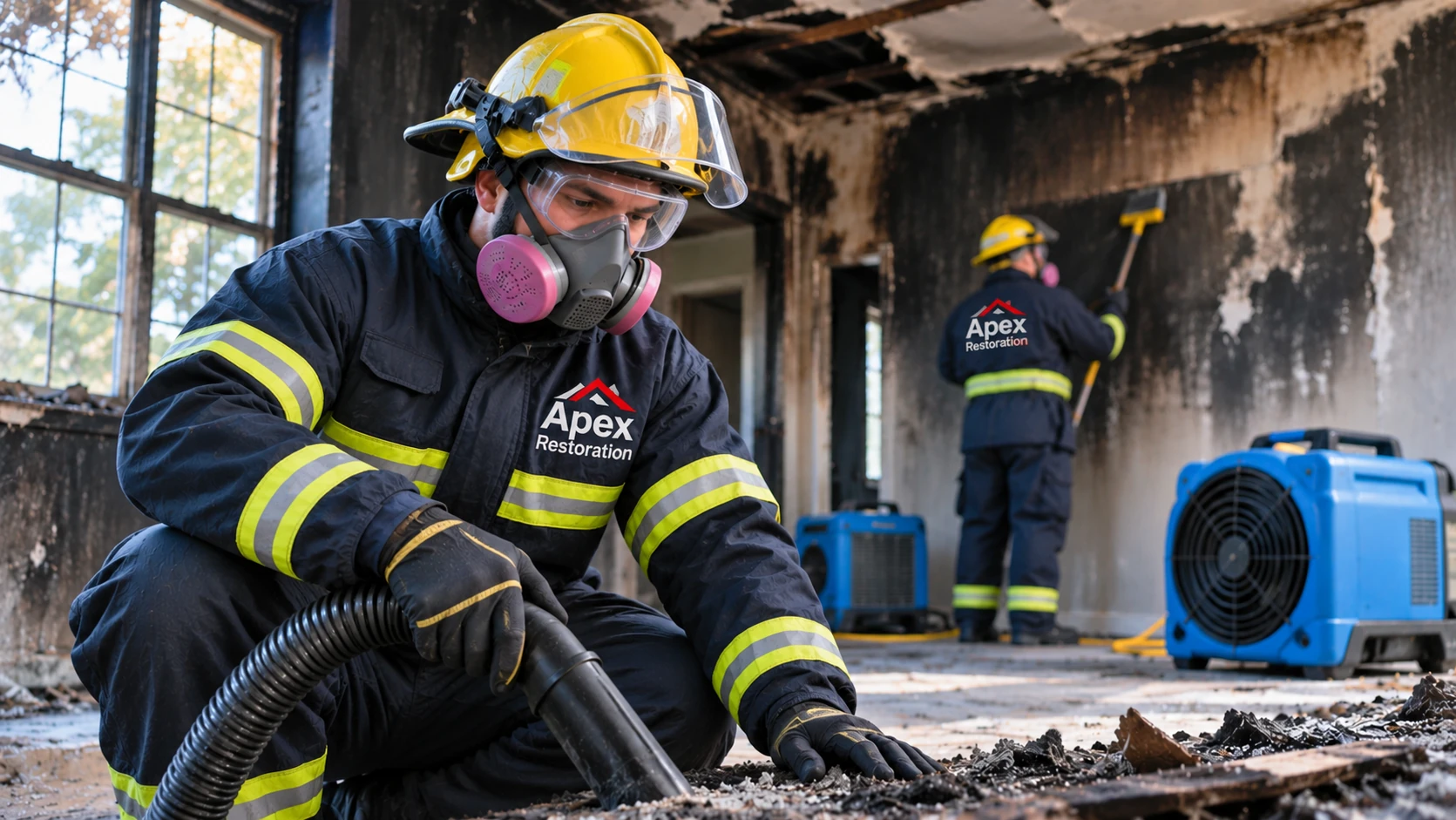
It helps to think of the project as two distinct halves. Mitigation, which covers emergency board-up, soot and debris removal, structural drying, and odor treatment, is usually the faster half and is often complete within one to three weeks. Reconstruction, which rebuilds what was removed, is the half that sets your move-in date. Our fire damage restoration operations in Dallas page outlines both halves and which crews handle each.
The table below gives realistic planning ranges. Treat them as planning figures rather than quotes, because only an on-site inspection can date your specific project.
| Severity of Loss | What It Typically Involves | Typical Total Duration |
|---|---|---|
| Light smoke / soot only | Surface cleaning, contents wipe-down, deodorization, HVAC cleaning | 3 – 10 days |
| Single-room fire | Room demolition, soot removal, drying, repaint and finish work | 2 – 4 weeks |
| Moderate multi-room fire | Selective demolition, water extraction, odor treatment, partial rebuild | 3 – 8 weeks |
| Major structural fire | Framing, roof, electrical and plumbing rebuild under city permits | 4 – 9 months |
| Total loss / full rebuild | Demolition to slab, engineering, full permitted reconstruction | 9 – 18 months |
Planning ranges only. Actual duration depends on damage depth, insurance approvals, permit review times, and material availability in the Dallas market.
What Are the Stages of the Fire Damage Restoration Timeline?
Each stage has a gate it cannot skip. Drying is not finished until moisture meters confirm materials have returned to a dry standard, and odor treatment is wasted effort if it is performed before soot-bearing materials are removed. A contractor who compresses these gates to look fast usually creates callbacks later, most often odor that reappears during the first humid week.
Stages five and six commonly run at the same time as structural work, because contents are cleaned at an off-site facility while crews stay on the property. That parallel scheduling is one of the main differences between a full-scope restorer and a cleanup-only vendor, and it is a fair question to ask during estimates.
| Restoration Stage | Typical Duration | What Determines the Length |
|---|---|---|
| Emergency response & board-up | 2 – 24 hours | Crew proximity and scene release by the fire department |
| Inspection & scope documentation | 1 – 3 days | Property size, hidden damage, adjuster scheduling |
| Debris & soot removal | 2 days – 2 weeks | Volume of charred material and demolition extent |
| Water extraction & structural drying | 3 – 7 days | Saturation depth, material type, humidity |
| Smoke, soot & odor treatment | 2 – 10 days | Residue type, odor penetration, sealing needs |
| Contents cleaning & storage | 1 – 6 weeks | Item count, off-site processing, specialty items |
| Reconstruction & final inspection | 2 weeks – 9 months | Permits, trade scheduling, material lead times |
Durations overlap in a well-run project. Contents cleaning and structural drying usually run alongside other stages rather than after them.
How Long Does Minor Fire Damage Restoration Take?
Minor does not mean cosmetic. A small stovetop fire sends greasy, protein-based residue through return air ducts and into rooms that never saw flame, so the schedule has to include HVAC and air quality work even when the visible damage is limited to one wall. Skipping that step is the most common reason a homeowner reports lingering odor weeks after the crew left.
Odor work also has its own clock. Surface cleaning handles most residue, but penetrated odor usually needs sealing plus a treatment cycle such as hydroxyl generation or thermal fogging, and those cycles run 24 to 72 hours. Our guide on why air fresheners fail and how odor treatment actually works explains why that time cannot be compressed, and our smoke, soot, and odor treatment division handles it as a measured stage rather than a spray-and-leave step.
Living in the Home During Minor Repairs
If the fire was contained, utilities are safe, and no demolition is scheduled, families often remain in the home while cleanup proceeds room by room. Ask the restorer to confirm in writing that air quality controls and containment are in place before you decide to stay, particularly if anyone in the household has asthma or another respiratory condition.
How Long Does Major Fire Damage Restoration Take?
Once framing, roof decking, electrical, or plumbing systems are compromised, the project stops being a cleaning job and becomes construction. That shift brings engineering letters, permit applications, trade sequencing, and inspection holds. Each of those is routine, and each adds days no contractor can eliminate, which is why structural repair and reconstruction is scheduled as its own phase with its own milestones.
Firefighting water is the quiet schedule risk in large losses. Thousands of gallons can sit in wall cavities and subfloors, and in the North Texas climate mold growth can begin within roughly 24 to 48 hours. If drying is delayed, remediation enters the scope and the timeline grows. Prompt firefighting water extraction and structural drying and early post-fire mold prevention are the cheapest weeks you will ever buy back, and our guide to firefighting water damage and secondary mold risk covers what that window looks like in practice.
What Factors Affect How Long Fire Damage Restoration Takes?
Notice how many of these factors are administrative rather than physical. Crews can clean a house faster than a carrier can approve a supplement or a city can schedule a framing inspection, which is why experienced restorers start documentation on day one instead of waiting until demolition is finished.
Residue type matters more than homeowners expect. Dry, high-heat soot from a fast-burning fire cleans differently than oily protein residue from a kitchen fire, and the wrong method can set a stain permanently and force refinishing that was never in the original scope. A detailed fire damage inspection identifies residue type before methods are selected, and our guide on how different types of smoke and soot affect your home covers the distinctions in depth.
| Factor | Effect on Timeline | What Reduces the Delay |
|---|---|---|
| Structural involvement | Adds weeks to months | Early engineering assessment and permit filing |
| Firefighting water volume | Adds 3 – 10 days, more if mold develops | Extraction and drying started within 24 – 48 hours |
| Smoke residue type | Adds days to weeks if misdiagnosed | Residue identification during inspection |
| Contents volume | Runs 1 – 6 weeks, usually in parallel | Off-site pack-out so structural work continues |
| Insurance scope approval | Adds 2 – 8 weeks | Line-item estimates and complete photo documentation |
| Permits & city inspections | Adds 2 – 6 weeks | A contractor familiar with Dallas permitting |
| Material lead times | Adds days to months on specialty items | Early ordering and approved substitutions |
| Crew capacity | Varies widely | A local restorer who self-performs most trades |
Ask any company you interview which of these factors applies to your property and how they plan to absorb it. A specific answer is a reliable sign of a managed schedule.
How Do Insurance Inspections Affect the Restoration Timeline?
Those statutory deadlines under the Texas Insurance Code set a floor, not a schedule. The clock only advances once the carrier has everything it asked for, which is why incomplete documentation is the most common cause of avoidable delay. Dated photo logs by room, moisture readings, and a line-item estimate let an adjuster approve a complete scope in one pass instead of three.
Supplements are the other timeline risk. Hidden charring above ceilings, soot drawn into ductwork, and moisture under flooring are routinely discovered after demolition begins, and anything missing from the original scope must be submitted and approved before that work can proceed. A restorer experienced in fire damage insurance documentation anticipates most of it up front, and our homeowner guide to navigating fire damage insurance claims walks through the paperwork from your side.
Do Not Wait for the Adjuster to Start Emergency Work
Texas homeowners policies include a duty to protect the property from further loss. Emergency board-up, tarping, and water extraction are expected to begin before the adjuster arrives, not after. Document everything with photos and keep every work authorization and receipt. Also note that a contractor repairing your property may not act as the public adjuster on that same claim under Texas law, so decline anyone who offers to negotiate the settlement for you.
How Can You Speed Up the Fire Damage Restoration Process?
Most lost time happens in the first 72 hours and in the handoffs between vendors, not on the job site. A property that sits open absorbs rain and humidity, soot keeps etching metal and glass surfaces, and water in wall cavities starts the mold clock. Same-day emergency response and property board-up is the highest-leverage decision available to you, and it also protects the claim.
The second lever is structural: one contract instead of three. When mitigation and reconstruction sit with separate companies, the rebuild scope has to be rewritten, re-estimated, and re-approved, and each handoff costs days of scheduling. If you are still comparing bidders, our guide on how to choose a fire damage restoration company includes the questions that reveal who can actually hold a schedule, and our cost breakdown for Dallas fire restoration shows what a complete line-item scope should contain.
Finally, respond quickly on your side. Material selections, color approvals, and signature requests sit in inboxes while crews stand idle. Ask for a written milestone schedule at the start, and ask the project manager which decisions they will need from you and when.
Choosing a Dallas Restoration Partner Who Can Hold the Timeline
Ask every estimator for a stage-by-stage schedule in writing and compare them side by side. A company that can tell you when drying will be verified, when odor treatment will run, when the permit will be filed, and who signs off at each milestone is a company that has managed the process before. Vague answers at the estimate stage reliably become vague answers in month three. If your fire happened within the last day, work through our first 24 hours after a house fire checklist before committing to anyone.
If your Dallas home or business has fire, smoke, or soot damage, our certified local team provides same-day assessment, documented scopes your adjuster can review, and complete restoration from emergency board-up through final reconstruction across all Dallas service areas. Call our 24/7 response line or request an assessment online for a written timeline specific to your property.
Need Professional Assessment or Assistance?
Explore our dedicated technical division for Fire Damage Restoration in Dallas, find mobile response teams across all 51 Dallas coverage areas, or review our comprehensive Dallas fire damage restoration operations.
Frequently Asked Questions
How long does smoke damage cleanup take?
Smoke and soot cleanup typically takes 3 to 10 days for one or two affected rooms, and 1 to 3 weeks when residue has traveled through the HVAC system or penetrated porous materials. The schedule includes surface cleaning, duct cleaning, sealing where needed, and a deodorization cycle that usually runs 24 to 72 hours. Cleanup confined to hard surfaces is at the fast end; protein residue from a kitchen fire generally takes longer.
Can I live in my house during fire damage restoration?
For a contained minor loss with safe utilities and no demolition scheduled, many families stay in the home while crews work room by room. For moderate and major losses you will usually need to relocate during demolition, drying, odor treatment, and reconstruction because of air quality, noise, and utility interruptions. Most homeowners policies include Additional Living Expenses coverage for temporary housing, so confirm that limit with your carrier early.
How long does it take for an insurance adjuster to inspect fire damage?
An adjuster typically inspects within a few days to two weeks of the claim being filed. Under the Texas Insurance Code, a carrier must generally acknowledge a claim within 15 days, accept or reject it within 15 business days after receiving all requested items, and pay an accepted claim within 5 business days. Emergency mitigation should still begin before that inspection, since policies require you to prevent further damage.
How long does it take to rebuild a house after a fire?
Permitted reconstruction after a major fire generally takes 4 to 9 months from scene release, and a total loss rebuilt from the slab can run 9 to 18 months. The build itself is only part of it: insurance scope approval, city plan review, inspection milestones, and material lead times each add weeks. Partial reconstruction limited to one or two rooms is far shorter, usually 2 to 6 weeks.
Why is my fire damage restoration taking so long?
The most common causes are supplemental insurance approvals for damage discovered during demolition, permit and inspection scheduling, material lead times, and handoff gaps when mitigation and reconstruction are split between two companies. Incomplete documentation is the usual root cause, because a carrier's response clock only advances once it has every item it requested. Ask your project manager for the current milestone schedule and the specific item the project is waiting on.
How soon should fire damage restoration start after a fire?
Restoration should begin the same day the fire department releases the scene. Soot is acidic and continues etching metal, glass, and finishes within hours, and firefighting water can begin supporting mold growth within roughly 24 to 48 hours in the North Texas climate. Starting emergency board-up and water extraction immediately both shortens the overall timeline and protects your claim against secondary damage disputes.