How Much Does Fire Damage Restoration Cost in Dallas?
Fire damage restoration costs are driven by severity, square footage, smoke and soot type, firefighting water, and structural repairs. Here is how Dallas homeowners can estimate the price and what insurance typically covers.
Key Answer & Essential Rule
National cost guides place most residential fire damage restoration projects between roughly $3,000 and $40,000, with reported averages from about $12,000 to $27,000 and a typical labor rate of $4 to $7 per square foot. Your actual Dallas price depends on fire severity, home size, smoke and soot type, firefighting water saturation, and how much structural rebuilding is required, so only an on-site inspection produces an accurate, itemized estimate.
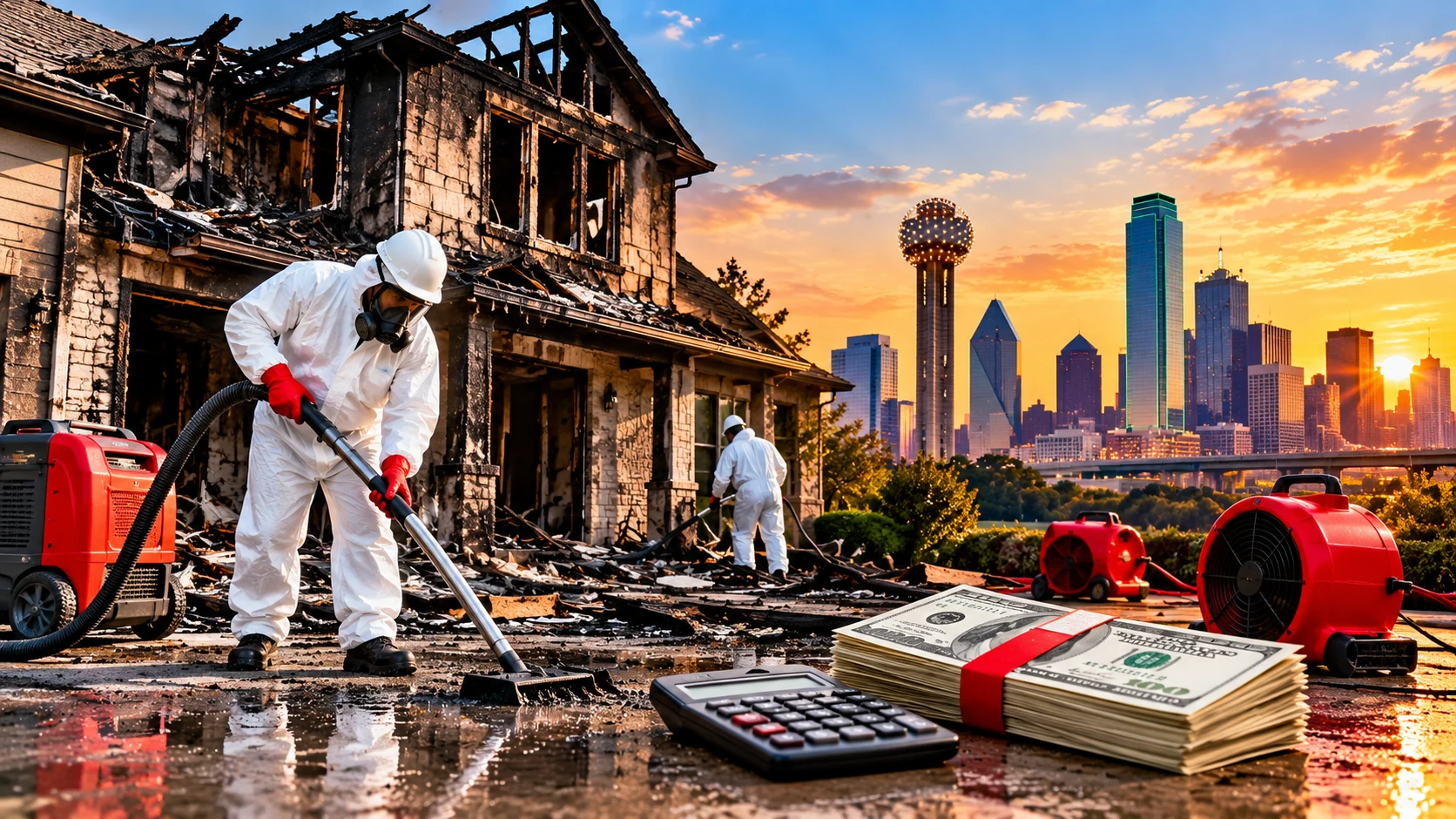
How Much Does Fire Damage Restoration Cost in Dallas on Average?
Because every fire is different, published averages are only a starting reference, not a quote. A contained, single-room cooking fire with light smoke may fall near the low end, while a multi-room blaze requiring firefighting water extraction and structural rebuilding can exceed the high end. The figures below are national industry averages; they are not Dallas-specific quotes, and local labor, material, and permit costs cause real variation.
The table below summarizes typical restoration cost ranges by home size, based on national industry cost data (2026) at $4 to $6.50 per square foot. Use it to set rough expectations before a professional on-site assessment, not as a binding price.
Important: These Figures Are Estimates, Not Exact Quotes
Every dollar amount in this guide is a national industry estimate shown for general reference only. Actual fire damage restoration prices vary widely from area to area, even block to block, depending on local labor and material costs, your chosen contractor, and the exact extent of the damage. The only reliable way to learn your true Dallas restoration cost is a documented on-site inspection and an itemized, line-item estimate.
| Home Size | Typical Restoration Cost Range (National Avg.) | Notes |
|---|---|---|
| 1,000 sq ft | $4,000 – $6,500 | Smaller homes, contained damage |
| 1,750 sq ft | $7,000 – $11,375 | Average single-story home |
| 2,000 sq ft | $8,000 – $13,000 | Typical Dallas suburban home |
| 2,500 sq ft | $10,000 – $16,250 | Larger family home |
| 3,000 sq ft | $12,000 – $19,500 | Multi-room or multi-level loss |
Estimates only. These are national industry averages, not exact Dallas quotes. Real prices vary significantly from area to area based on local labor and material rates, your contractor, and the specific condition of your property.
What Factors Affect Your Fire Damage Restoration Cost?
Smoke and soot type matters more than many homeowners expect. Dry, high-heat smoke is comparatively easier to clean, while oily wet smoke and protein residues from kitchen fires require specialized cleaning chemistry and more labor hours. Firefighting water adds another major cost layer: thousands of gallons used to suppress a fire can saturate subfloors and wall cavities, creating drying and potential mold-remediation costs on top of the fire cleanup itself.
The single largest cost driver is structural rebuilding. Surface cleaning and deodorizing are modest compared with replacing charred framing, drywall, insulation, and finishes. When a fire compromises load-bearing elements or the roof, reconstruction can account for the majority of the total project cost.
| Restoration Component | Typical Cost (National Avg.) | What It Covers |
|---|---|---|
| Smoke damage cleanup | $200 – $1,200 per room | Surface cleaning, odor removal, deodorizing |
| Soot removal | $400 – $1,700 | Soot cleanup, air-duct cleaning, deodorizing |
| Thermal fogging / ozone | $200 – $600 per floor | Deep odor neutralization of trapped smoke |
| Firefighting water cleanup | $3,000 – $6,000 per room | Water extraction, structural drying, drywall repair |
| Structural repair / rebuild | $15,000 – $25,000 per room | Framing, sheetrock, insulation, finishes |
Estimates only. Per-room and per-component costs vary by area, contractor, residue type, and severity. Request an itemized on-site estimate for accurate Dallas pricing.
How Does Damage Severity Change the Price?
Minor loss: A small, contained fire, such as a stovetop or appliance fire, primarily involves smoke and soot cleanup, deodorizing, and minor surface repairs. These projects are the least expensive because little or no framing is affected.
Moderate loss: When flames, heavy soot, and firefighting water reach multiple rooms, costs rise with drying, selective demolition, and partial reconstruction. Major loss: Fires that char load-bearing framing, the roof, or large portions of the home require engineering review, extensive rebuilding, and often code-upgrade work, which drives the highest estimates.
Delays Increase Cost
Acidic soot etches surfaces within hours, and in the warm North Texas climate mold can begin growing on wet materials within 24 to 48 hours. Postponing mitigation can convert a cleanable surface into a replacement expense, raising the total restoration cost.
How Much Do Smoke, Soot, and Firefighting Water Cost to Clean Up?
Smoke and soot removal costs depend heavily on residue type and the materials affected. Oily soot from grease fires and protein residues cling tightly to cabinetry, tile grout, and appliances, requiring more labor and specialized cleaning agents than dry, powdery soot. Professional smoke, soot, and odor treatment also addresses the HVAC system, which can redistribute contaminants throughout the home if left untreated.
Firefighting water is an often-underestimated expense. Suppression water flows downward through floor penetrations and wall cavities, so even a fire isolated to an upper floor can saturate the structure below. Prompt professional firefighting water damage extraction and psychrometric drying help prevent secondary mold damage, which would add further remediation cost.
How Much Does Structural Repair and Reconstruction Cost?
Reconstruction includes replacing burned studs and joists, sheetrock, insulation, flooring, and finishes, as well as any electrical, plumbing, or HVAC components damaged by heat. In older Dallas neighborhoods, municipal code-upgrade requirements, such as modern wiring, interconnected smoke alarms, and updated insulation, can add to the rebuild scope during permitted repairs.
Because reconstruction spans multiple trades, it is best handled by a restoration contractor who can coordinate fire damage structural work and deliver a single itemized scope. A detailed line-item estimate prevents gaps between the carrier's scope and the true cost of returning your home to a pre-loss, code-compliant condition.
Does Insurance Cover Fire Damage Restoration in Dallas?
Your out-of-pocket cost is usually your deductible plus any amount exceeding your coverage limits, rather than the full restoration price. Replacement-cost policies commonly pay in two parts: an initial ACV payment, followed by withheld 'recoverable depreciation' released after the work is completed and invoiced. Keeping detailed photo documentation and itemized estimates protects your settlement.
Texas law allows you to choose your own licensed restoration contractor. You are not required to use a carrier's preferred vendor. A contractor experienced with fire damage insurance claims can prepare the itemized documentation adjusters expect, which helps ensure the approved scope reflects the real cost of a complete, code-compliant repair.
How Do You Get an Accurate Fire Damage Restoration Estimate in Dallas?
Before any price is meaningful, the property must be inspected for scene-released safety, structural integrity, soot migration through ductwork, and trapped firefighting water. A professional fire damage inspection establishes the full scope so nothing is missed. Overlooked attic charring and hidden subfloor moisture are common reasons initial estimates fall short and supplements become necessary.
When requesting estimates, ask for a detailed line-item breakdown rather than a single lump sum, confirm whether emergency mitigation and contents cleaning are included, and verify licensing and certifications. If you have experienced a fire, contact our local Dallas restoration team for a documented assessment before committing to any figure.
Need Professional Assessment or Assistance?
Explore our dedicated technical division for Fire Damage Restoration in Dallas, find mobile response teams across all 51 Dallas coverage areas, or review our comprehensive Dallas fire damage restoration operations.
Frequently Asked Questions
Is fire damage restoration covered by homeowners insurance in Texas?
Yes. Fire is a standard covered peril under Texas homeowners policies, so most restoration costs, including smoke, soot, and firefighting water damage, are typically reimbursable minus your deductible. Many policies also cover Additional Living Expenses while your home is uninhabitable. Coverage limits and ACV versus RCV terms vary by policy, so review your declarations page and keep thorough documentation.
How much does it cost to clean smoke damage in one room?
National cost guides report smoke damage cleanup at roughly $200 to $1,200 per room, depending on the residue type and materials affected. Oily and protein-based soot from kitchen fires costs more to clean than dry, powdery smoke. Odor treatments such as thermal fogging or ozone may add $200 to $600 per floor. These are national averages, not Dallas-specific quotes.
Why do fire damage restoration estimates vary so much?
Estimates vary because fire losses differ in severity, square footage, smoke and soot type, firefighting water saturation, and the amount of structural rebuilding required. Each is priced separately, so two similar-sized homes can receive very different quotes. Hidden damage, such as soot in ductwork or moisture in subfloors, also affects the final figure, which is why an on-site inspection is essential.
How much does it cost to rebuild a house after a fire?
Structural reconstruction is priced separately from cleanup. National data places a standard rebuild near $50 per square foot and a complete reconstruction at roughly $100 to $125 per square foot, with per-room structural repairs around $15,000 to $25,000. The exact cost depends on how much framing, roofing, and finish work must be replaced to current building codes.