Soot Removal in Dallas, TX
Soot is a complex, highly acidic byproduct of incomplete combustion consisting of pure carbon particulates, toxic chemical aerosols, and unburned fuel resins. Because soot particles are microscopically small (as small as 0.1 microns), they easily penetrate porous building materials, settle into wall cavities, and coat vertical and overhead architectural surfaces. In Dallas's high ambient humidity, sulfur and nitrogen oxides inside soot react with moisture to form corrosive acids that permanently etch glass, tarnish metals, and pit stone within 48 to 72 hours.
Our Dallas-based soot removal teams deliver specialized chemical decontamination across all 51 Dallas ZIP codes. Certified under IICRC FSRT standards, our technicians identify the specific chemical composition of the soot, select matching counteracting reagents, and deploy dry chemical sponges, low-pressure washing systems, and ultrasonic tanks to safely extract soot without driving contaminants deeper into your building's finished surfaces.
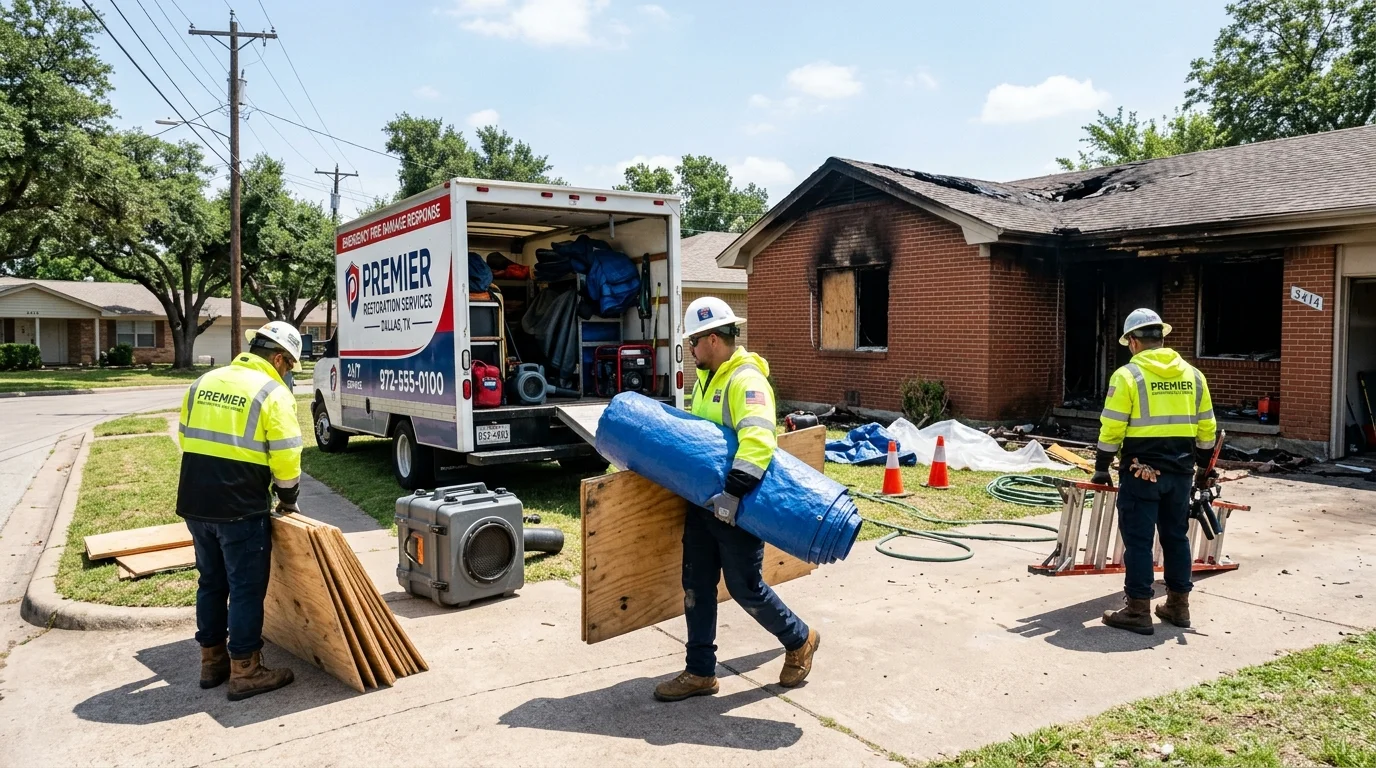
Dallas Smoke & Odor Neutralization Desk
IICRC Master Fire & Smoke specialists deployed with thermal fogging & hydroxyl systems.
What Does the Professional Soot Removal Process Include?
Safely removing soot requires an exact, multi-stage decontamination procedure:
Soot Classification & Chemical Testing
We test soot deposits to determine whether contamination is dry carbon (wood/paper fires), wet oily soot (plastic/synthetic fires), or protein glaze (cooking fires) to select the correct cleaning chemistry.
Environmental Containment & Air Filtration
Work areas are sealed with 6-mil poly containment barriers, and commercial HEPA air scrubbers run continuously to capture dislodged soot particles before they drift into clean rooms.
Dry Chemical Sponge Extraction
Technicians use vulcanized natural rubber sponges to lift loose carbon soot from walls, ceilings, and woodwork dry—preventing the smudging and permanent staining caused by water-based wiping.
Targeted Alkaline Washdown
Once loose soot is lifted, surfaces receive an alkaline counteracting wash formulated to break the chemical bond between oily soot resins and underlying paint or masonry.
Neutralizing Rinse & Dry
Cleaned surfaces are rinsed with specialized neutralizing agents and dried thoroughly to prevent moisture absorption into drywall and wood framing.
Encapsulating Barrier Coating
For heavily compromised framing or subfloors, technicians apply pigmented shellac or solvent-based encapsulants to lock in sub-surface residues permanently.
Specialized Soot Removal Sub-Services
Explore our dedicated soot removal solutions tailored to specific architectural surfaces:
Soot Removal From Walls
Specialized vertical bottom-to-top chemical cleaning preventing ugly weeping drip marks.
Protects flat latex, eggshell, and historic plaster finishes.
Soot Removal From Ceilings
Overhead soot extraction for acoustic popcorn, textured, and vaulted ceiling assemblies.
Utilizes elevated scaffolding and low-abrasion dry extraction techniques.
Soot Removal From HVAC
Register, boot, and return plenum decontamination within the living envelope.
Prevents central blower fans from blowing soot into clean rooms.
Frequently Asked Questions
Can I clean soot off my walls using a regular kitchen sponge and dish soap?
No. Household dish soaps and wet sponges dissolve the soot binders, turning dry soot into a greasy black smear that penetrates the paint pores. Once smeared, the stain cannot be washed away and requires specialized stain-blocking primers and repainting.
How do you remove soot from delicate painted drywall without damaging the paint?
We first use dry vulcanized rubber chemical sponges that pull soot particles into their porous matrix using electrostatic attraction without moisture. Once the loose soot is extracted, we apply a gentle, pH-balanced foaming detergent with microfiber towels, preserving the paint surface.
Is soot from a house fire hazardous to my health?
Yes. Modern buildings contain large volumes of plastics, fire-retardant foams, and synthetic textiles. Burning these materials produces soot laden with heavy metals, dioxins, formaldehyde, and polycyclic aromatic hydrocarbons (PAHs) that pose serious inhalation and skin absorption hazards.
Does homeowners insurance cover professional soot cleanup?
Yes. Professional soot decontamination, structural washing, and air scrubbing are standard covered perils under residential and commercial property insurance policies across Texas.
Related Smoke, Soot & Odor Solutions
Vertical wall soot cleaning and paint preservation.
Overhead ceiling soot extraction and texture preservation.
Register and duct boot soot decontamination.
Complete overview of smoke, soot, and odor solutions in Dallas.
Available Across All 51 Dallas ZIP Codes
Our emergency response and restoration specialists deploy 24/7 across every Dallas County neighborhood. Select your local district below for localized response details:
Fire Recovery & Technical Insights
What to Do in the First 24 Hours After a House Fire
Critical safety, insurance notification, and board-up steps once fire officials release the scene.
Understanding Smoke and Soot Types: Wet, Dry & Protein
Why household cleaning smears acidic soot and how chemical counteractants stop etching.
Navigating Fire Damage Insurance Claims
How Xactimate line-item estimates, ACV vs RCV, and Texas building ordinance coverage work.