Fire Odor Elimination in Dallas, TX
Smoke odor is among the most stubborn and distressing consequences of a property fire. The pervasive smell is not simply airborne dust; it is caused by microscopic volatile organic compounds (VOCs), polycyclic aromatic hydrocarbons, and synthetic combustion resins that have penetrated deep into porous drywall, structural wood framing, insulation, and concrete subfloors. During North Texas summers, high heat and humidity cause building materials to expand, releasing trapped smoke molecules back into the air—meaning standard air fresheners, sprays, or ozone candles only temporarily mask odors while the chemical source remains active.
Our Dallas-based fire restoration specialists deliver permanent molecular fire odor elimination across all 51 Dallas ZIP codes. Certified under IICRC OCT (Odor Control Technician) standards, our teams never rely on superficial masking scents. We deploy industrial thermal fogging, commercial hydroxyl generators, high-output ozone chambers, and multi-stage HEPA air scrubbers that attack and break the chemical bonds of odor-causing molecules, returning your indoor environment to clean, fresh air.
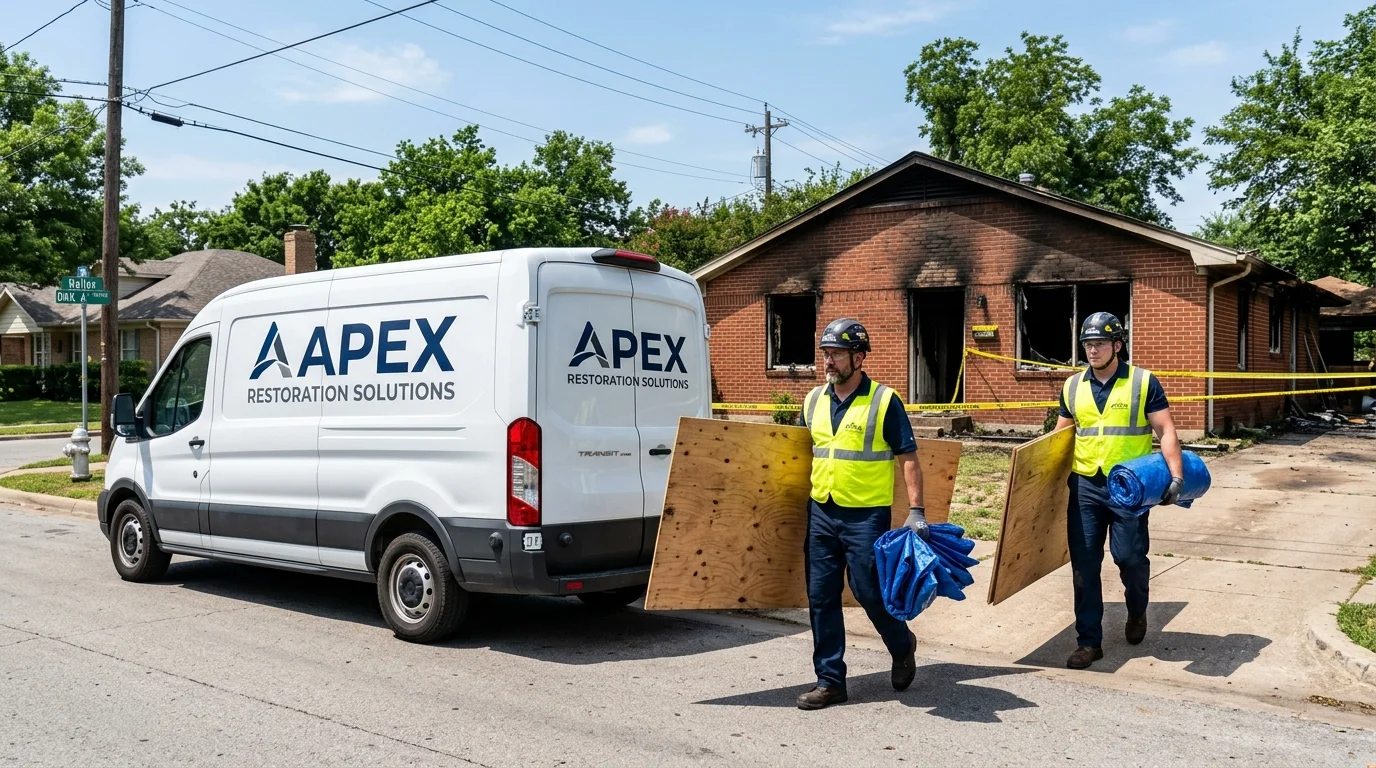
Dallas Smoke & Odor Neutralization Desk
IICRC Master Fire & Smoke specialists deployed with thermal fogging & hydroxyl systems.
The Science of Molecular Odor Neutralization
Permanent smoke deodorization requires changing the chemical structure of the odor-causing compound so that it no longer produces a scent:
Source Removal
Before deploying deodorization equipment, all non-salvageable charred materials and loose soot deposits must be physically removed. Deodorizing while burnt debris remains inside is ineffective.
Replication of Smoke Behavior
Smoke penetrates porous materials because it is hot and pressurized. To reach the same microscopic pores, we utilize thermal fogging that creates micro-droplets following the exact path of the original smoke.
Molecular Oxidation
Chemical oxidizers (such as ozone gas and hydroxyl radicals) react with volatile smoke molecules, breaking complex carbon-hydrogen chains and converting them into inert carbon dioxide, water vapor, and oxygen.
Permanent Encapsulation
For deep framing timber and subfloor decking, technicians apply clear or white-pigmented shellac sealants that form an impenetrable barrier, permanently trapping any sub-surface molecules.
Dedicated Odor Elimination Sub-Services
Explore our specialized odor elimination protocols across Dallas County:
Ozone Gas Treatment
High-output O3 gas oxidation for severe whole-house deodorization in strictly unoccupied spaces.
Breaks molecular double bonds of stubborn synthetic smoke resins.
Thermal Fogging
Micro-droplet pairing agents replicating smoke penetration into structural framing and attic cavities.
Binds with odor compounds inside wood pores, neutralizing smells permanently.
Hydroxyl Generator Treatment
Safe-for-occupied-spaces UV atmospheric radical decontamination.
100% safe for humans, pets, delicate textiles, and functioning businesses.
Negative Air Scrubbing
Continuous HEPA and activated carbon air filtration purging airborne particulates and volatile smoke gases.
Maintains negative pressure to prevent odor migration into clean rooms.
Frequently Asked Questions
Can fire odor be removed without tearing out all the drywall?
Yes. In the majority of smoke losses where drywall has not suffered structural water damage or direct burning, our combination of chemical surface washing, thermal fogging, and odor-encapsulating primers permanently eliminates smoke odors without requiring full drywall demolition.
How long does a whole-house fire deodorization treatment take?
Depending on the severity of the fire and the chosen technology, whole-house deodorization typically takes between 24 and 72 hours. Hydroxyl treatments may run continuously for 3 to 5 days, while ozone gas treatments typically run for 24 to 48 hours followed by complete fresh-air flushing.
Is ozone treatment safe for sensitive electronics and rubber items?
High concentrations of ozone gas can degrade natural rubber, elasticity in fabrics, and certain delicate camera or electronic components over extended exposure. Our certified technicians assess all contents before treatment, removing sensitive items or utilizing safe hydroxyl generator technology instead.
Will the smoke smell come back when the weather gets hot and humid?
No. Because our treatments destroy smoke molecules through molecular oxidation and seal structural timber with encapsulating primers, the chemical compounds responsible for the odor are permanently destroyed rather than masked.
Related Smoke, Soot & Odor Solutions
High-output O3 gas chamber oxidation for unoccupied structures.
Micro-droplet pairing agents replicating smoke penetration.
Safe-for-occupied-spaces UV atmospheric radical decontamination.
HEPA negative-air filtration and activated carbon gas purifiers.
Available Across All 51 Dallas ZIP Codes
Our emergency response and restoration specialists deploy 24/7 across every Dallas County neighborhood. Select your local district below for localized response details:
Fire Recovery & Technical Insights
What to Do in the First 24 Hours After a House Fire
Critical safety, insurance notification, and board-up steps once fire officials release the scene.
Understanding Smoke and Soot Types: Wet, Dry & Protein
Why household cleaning smears acidic soot and how chemical counteractants stop etching.
Navigating Fire Damage Insurance Claims
How Xactimate line-item estimates, ACV vs RCV, and Texas building ordinance coverage work.