Why Masking Scents Fail: The Science of Thermal Fogging, Hydroxyls, and Ozone in Fire Odor Removal
Smoke odor is not merely an unpleasant smell—it is microscopic chemical compounds bonded deep inside porous building materials. Learn how professional molecular neutralization works.
Key Answer & Essential Rule
Spraying air fresheners or consumer deodorizers only deposits perfume over volatile organic compounds (VOCs). When indoor humidity rises, trapped smoke particles re-release pungent aromas. True odor removal requires molecular breakdown using thermal fogging, hydroxyl oxidation, or ozone treatment.
Why Does Smoke Odor Penetrate Deeply into Building Materials?
Whenever indoor temperature and relative humidity rise—a frequent occurrence in Texas—building materials naturally expand, releasing trapped smoke molecules back into the living space.
Surface wiping and aerosol sprays cannot reach these deep internal pores. Without opening the pores and chemically neutralizing the embedded resins at the molecular level, smoke odor will persist for years.
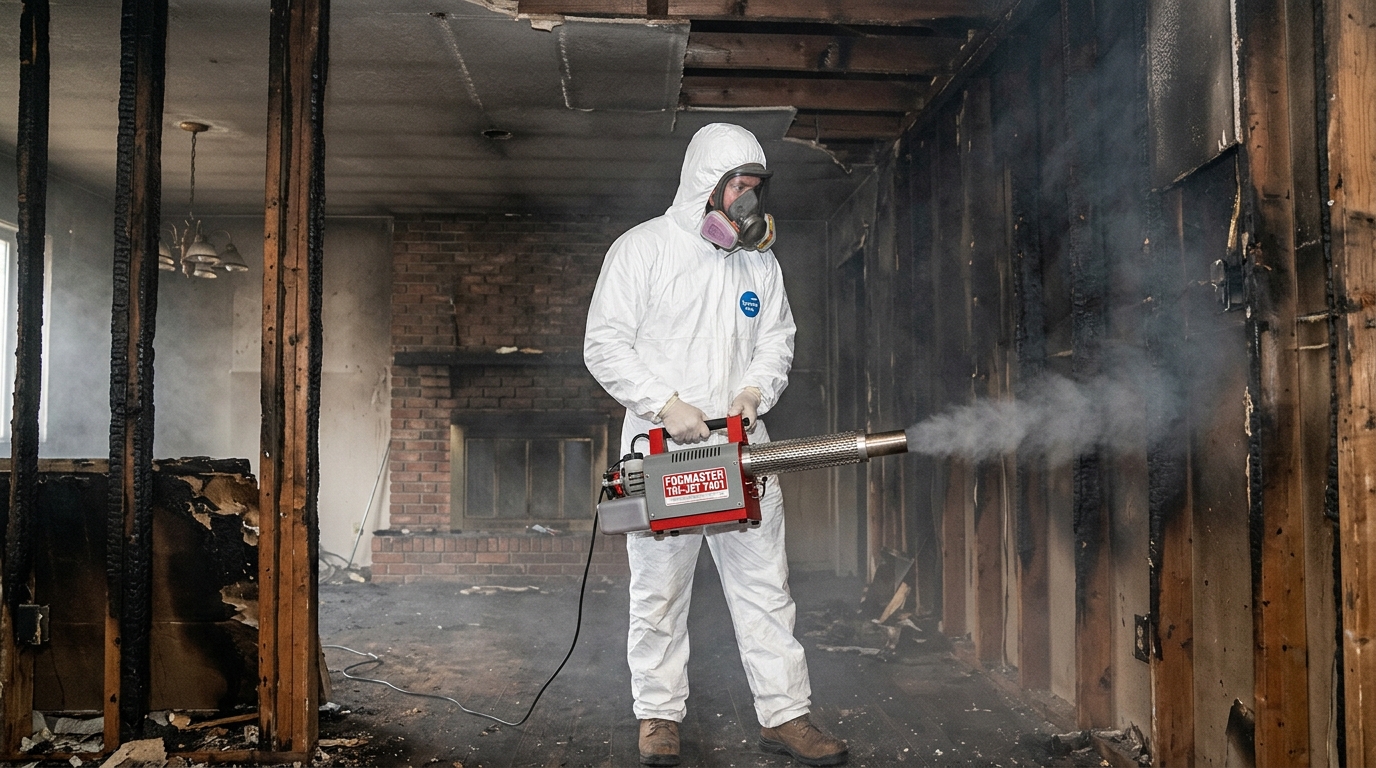
How Does Thermal Fogging Mimic Fire Physics to Neutralize Odors?
Because the fog droplets are identical in size to smoke particulates, they follow the exact thermal airflow pathways that the fire smoke took during the loss.
The fog's chemical counteractant pairs with the odor molecules, permanently altering their chemical structure so they can no longer bind to human olfactory receptors.
What Is the Difference Between Hydroxyl Generators and Ozone Machines?
Hydroxyl radicals are safe for occupied environments and eliminate both airborne odors and surface-bound contaminants. They react within milliseconds, breaking down the chemical bonds of volatile organic compounds, carbon chains, and sulfur gases.
Ozone machines remain effective for unoccupied deep shock treatments, but excessive ozone exposure can degrade natural rubber backing in carpeting, deteriorate foam furniture cushions, and corrode sensitive electronic contacts.
| Attribute | Thermal Fogging | Hydroxyl Generators | Ozone Treatments (O3) |
|---|---|---|---|
| Safety for Occupants | Must evacuate during application and aeration | 100% safe for humans, pets, and indoor plants | Must completely evacuate during treatment |
| Particle Size / Action | 0.5 – 2 micron solvent aerosol fog | Gaseous hydroxyl radicals (OH-) | Gas phase ozone molecule (O3) |
| Primary Target | Porous timber, structural voids, framing | Continuous ambient air and contents decontamination | Shock treatment of unoccupied spaces |
| Effect on Sensitive Materials | Safe when properly applied | Zero degradation of rubber, plastics, or fabrics | Can dry out rubber, foam, and certain wire coatings |
Why Must the HVAC System and Ductwork Be Decontaminated?
Professional HVAC decontamination utilizes high-powered negative air HEPA machines creating thousands of cubic feet per minute (CFM) of suction.
Technicians insert rotating mechanical whip brushes to loosen adhered soot from duct walls while an antimicrobial and encapsulating sealant coats internal surfaces to permanently lock in microscopic residues.
Need Professional Assessment or Assistance?
Explore our dedicated technical division for Smoke, Soot & Odor Treatment, find mobile response teams across all 51 Dallas coverage areas, or review our comprehensive Dallas fire damage restoration operations.
Frequently Asked Questions
Can ozone remove smoke smell from clothing and upholstered furniture?
Yes. Ozone chambers are highly effective for salvageable soft goods, garments, and upholstered furniture. However, fragile vintage fabrics, natural rubber components, and high-end electronics should be treated with hydroxyl chambers instead to prevent oxidation damage.
How long does professional smoke odor removal take?
Depending on the square footage and severity of the burn, professional odor elimination typically takes 24 to 72 hours of continuous hydroxyl or ozone treatment, preceded by source removal (cleaning charred material).
Does baking soda or charcoal work for house fire smoke odor?
Baking soda and activated charcoal can absorb minor surface odors in small enclosed cabinets, but they lack the molecular reach and catalytic energy required to neutralize heavy smoke resins embedded inside structural wall cavities and subfloors.