Smoke Residue Removal in Dallas, TX
When smoke drifts across rooms, it deposits a microscopically fine, sticky residue that adheres to every exposed surface. This residue is composed of complex hydrocarbons, carbon particulates, and acidic combustion droplets. If an untrained person wipes smoke residue with a wet cloth or standard household spray, the moisture emulsifies the carbon, driving oily soot deep into the microscopic pores of latex paint, wood grain, and acoustic ceilings—turning easily removable surface residue into a permanent, smeared stain.
Our Dallas restoration specialists deliver precision smoke residue removal across all 51 Dallas ZIP codes. Using specialized vulcanized natural rubber chemical sponges, point-of-contact HEPA vacuums, and dry particulate lifting techniques, we extract dry, oily, and synthetic smoke films without smudging or driving contaminants deeper into your building's finished surfaces.
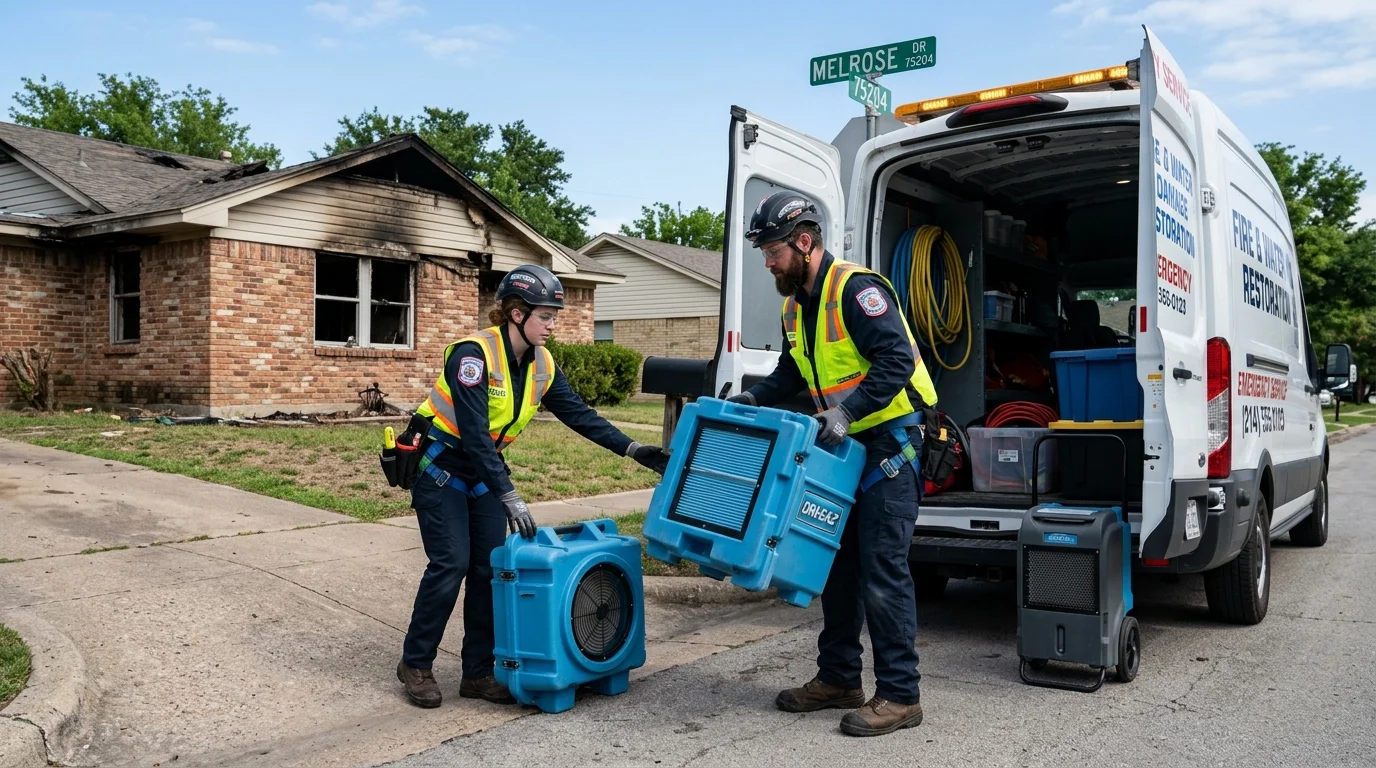
Dallas Smoke & Odor Neutralization Desk
IICRC Master Fire & Smoke specialists deployed with thermal fogging & hydroxyl systems.
What Does Professional Smoke Residue Removal Entail?
Extracting delicate smoke residues requires a disciplined dry-first operational protocol developed under IICRC FSRT standards:
Particulate Pre-Vacuuming
Technicians use specialized HEPA-filtered restoration vacuums equipped with natural horsehair brush attachments to gently dislodge and lift loose surface carbon dust without scratching delicate finishes.
Vulcanized Dry Chemical Sponge Application
Crews wipe surfaces with specialized non-toxic natural rubber sponges. The micro-cellular structure of these dry sponges draws carbon particles into the sponge material through electrostatic attraction without smearing.
Top-to-Bottom Controlled Sweep
To avoid cross-contaminating previously cleaned areas, technicians work systematically using straight, overlapping strokes, periodically trimming away the loaded outer layer of the sponge.
Solvent-Free Degreasing for Synthetic Residues
For sticky residues left by burned plastics or foam upholstery, crews utilize specialized dry-cleaning solvent pads that dissolve sticky binders without introducing water.
Trim and Detail Residue Extraction
Intricate architectural molding, door frames, switch plates, and HVAC diffuser louvers are cleaned using specialized detail swabs and microfiber detailing towels.
Final Surface Verification
Cleaned areas are inspected under high-intensity raking light to verify complete residue removal before any secondary wet washing or sealing is considered.
Why Dry Sponging Must Precede All Wet Cleaning
Understanding the physical chemistry of smoke residue explains why liquid cleaners should never be applied first:
Phase 1: Dry Extraction (Scope of This Page)
Captures 80% to 90% of surface carbon particulates without dissolving binders or causing moisture streaks.
Preserves fragile flat latex paint and acoustic ceiling textures.
Phase 2: Alkaline Washdown (Secondary Step)
Dissolves remaining microscopic oily films and chemically neutralizes acidic surface residues.
Applied only after all loose particulate residue has been extracted.
Frequently Asked Questions
What exactly is a 'chemical sponge' used for smoke residue removal?
Despite its name, a chemical sponge contains no added chemicals. It is made of 100% vulcanized natural rubber with open micro-cells. The friction created as it is wiped across a surface generates electrostatic attraction that pulls fine soot and smoke particulates into the sponge without liquid or soap.
Can I wash smoke residue off my walls with water and a dish sponge?
No. Introducing water to dry smoke residue creates a corrosive black slurry that soaks straight into the drywall paper and paint pores. This creates indelible smear marks that cannot be washed away and requires multiple coats of specialty stain-blocking primer to cover.
How do you clean smoke residue off delicate acoustic ceiling tiles?
Acoustic ceiling tiles are extremely porous and fragile. We use low-abrasion dry soot sponges paired with low-flow HEPA vacuum shrouds, gently drawing out soot particles without breaking the cellulose tile structure or loosening ceiling texture.
Does removing smoke residue eliminate the smoky fire odor?
Removing the surface residue eliminates a major source of ongoing odor off-gassing. However, because smoke odor also penetrates porous framing, complete whole-house deodorization requires subsequent thermal fogging or hydroxyl generator treatment (Block 4 Odor Elimination).
Related Smoke, Soot & Odor Solutions
Overview of comprehensive smoke chemical neutralization.
Alkaline stain-lifting for drywall, ceilings, and brick.
Turnkey whole-room cosmetic and surface recovery.
Vertical wall soot cleaning and paint preservation.
Available Across All 51 Dallas ZIP Codes
Our emergency response and restoration specialists deploy 24/7 across every Dallas County neighborhood. Select your local district below for localized response details:
Fire Recovery & Technical Insights
What to Do in the First 24 Hours After a House Fire
Critical safety, insurance notification, and board-up steps once fire officials release the scene.
Understanding Smoke and Soot Types: Wet, Dry & Protein
Why household cleaning smears acidic soot and how chemical counteractants stop etching.
Navigating Fire Damage Insurance Claims
How Xactimate line-item estimates, ACV vs RCV, and Texas building ordinance coverage work.