Smoke Damage Restoration in Dallas, TX
When fire smoke penetrates a property, it affects every square foot of the living space: walls, ceilings, interior millwork, lighting fixtures, window treatments, and flooring. Restoring a smoke-compromised property back to a safe, livable environment requires far more than spot-cleaning or surface repainting. It demands a coordinated, multi-stage restoration protocol that addresses airborne soot particles, embedded chemical residues, acidic surface etching, and pervasive combustion odors throughout the entire affected area.
Our Dallas-based restoration team delivers comprehensive smoke damage restoration across all 51 Dallas ZIP codes. We manage the entire recovery cycle—from initial air containment and HEPA negative-air filtration to chemical residue extraction, ultrasonic fixture decontamination, and shellac encapsulating sealants. Our IICRC-certified specialists restore damaged building assemblies to pristine pre-loss standards, minimizing structural replacement and accelerating your timeline to re-occupancy.
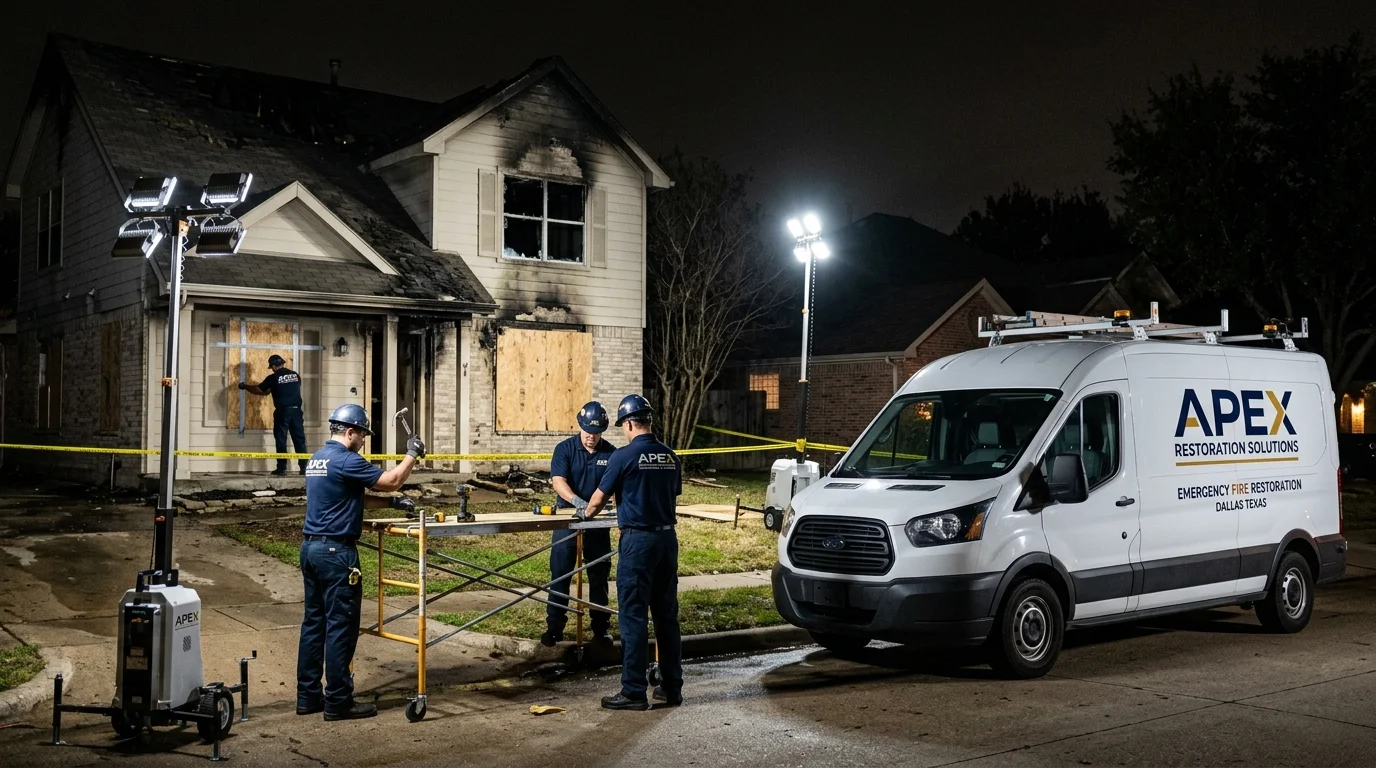
Dallas Smoke & Odor Neutralization Desk
IICRC Master Fire & Smoke specialists deployed with thermal fogging & hydroxyl systems.
What Does the Complete Smoke Damage Restoration Process Include?
True smoke damage restoration follows a disciplined, scientifically validated workflow designed to prevent cross-contamination and guarantee complete odor and residue elimination:
Environmental Containment & Air Filtration
Establishment of 6-mil poly containment zones and operation of commercial HEPA air scrubbers equipped with activated carbon filters to purge airborne particulates from the breathing zone.
Surface Residue & Ash Extraction
Systematic dry-sponging of walls, ceilings, and architectural trim with vulcanized natural rubber sponges, removing loose carbon particles before any wet cleaning begins.
Multi-Stage Chemical Surface Washing
Application of targeted alkaline washes formulated to dissolve acidic soot binders, neutralize corrosive chemical residues, and lift embedded stains.
Ultrasonic Hardware & Fixture Recovery
Treatment of lighting fixtures, switch plates, vent covers, and architectural hardware in commercial ultrasonic cavitation tanks to eliminate micro-soot from internal mechanisms.
Atmospheric & Cavity Deodorization
Deployment of industrial thermal foggers and hydroxyl generators that penetrate porous framing timber, subfloors, and wall cavities, permanently destroying VOCs at the molecular level.
Encapsulating Barrier Application
Application of pigmented shellac or solvent-based encapsulants to deeply permeated wood framing or subflooring to lock in sub-surface compounds permanently.
Final Clearance Verification
White-glove wipe tests, particle count measurements, and air quality assessments to ensure the environment is fully safe for family re-occupancy or final cosmetic painting.
Smoke Damage Restoration vs. Structural Rebuilding
Maintaining clear boundaries between surface decontamination and general contractor reconstruction ensures transparent billing and rapid execution:
Smoke Damage Restoration (Block 4 Scope)
Surface decontamination, chemical sponge cleaning, stain removal, and molecular deodorization.
Restores salvageable surfaces to clean, paint-ready condition without structural tear-out.
Structural Rebuilding (Block 5 General Contractor Scope)
Framing sistering, truss replacement, hanging new drywall, and full carpentry repairs.
Addresses structurally charred, load-compromised, or burned-through building components.
Frequently Asked Questions
How long does a full-room smoke damage restoration project take?
For an average residential room with moderate smoke contamination, complete chemical decontamination, air scrubbing, and deodorization typically takes 2 to 4 days. Whole-property restorations involving heavy smoke penetration generally require 5 to 7 days before final painting and re-occupancy.
Can our family stay in the home during smoke damage restoration?
If smoke contamination is isolated to a single room and proper containment with negative air pressure is established, occupants may remain in unaffected areas. However, for whole-house smoke events or during ozone treatments, temporary relocation is recommended for safety and comfort.
How do you treat smoke damage behind drywall and inside wall cavities?
We inject specialized thermal fogging deodorizers and dry chemical aerosols directly into wall cavities through small, unobtrusive access ports, or through open baseboard gaps. This neutralizes hidden soot odors inside stud cavities without requiring full drywall demolition.
Does smoke damage restoration include repainting?
Smoke damage restoration decontaminates the walls, removes stains, and applies stain-blocking and odor-encapsulating primers, leaving the walls completely clean and paint-ready. Final cosmetic finish painting can be coordinated through our general contracting rebuild division (Block 5).
Related Smoke, Soot & Odor Solutions
Dry chemical sponge extraction preventing soot smearing.
Alkaline stain-lifting for drywall, ceilings, and brick.
Molecular smoke odor destruction via thermal fogging and hydroxyls.
Turnkey structural reconstruction and general contractor rebuild.
Available Across All 51 Dallas ZIP Codes
Our emergency response and restoration specialists deploy 24/7 across every Dallas County neighborhood. Select your local district below for localized response details:
Fire Recovery & Technical Insights
What to Do in the First 24 Hours After a House Fire
Critical safety, insurance notification, and board-up steps once fire officials release the scene.
Understanding Smoke and Soot Types: Wet, Dry & Protein
Why household cleaning smears acidic soot and how chemical counteractants stop etching.
Navigating Fire Damage Insurance Claims
How Xactimate line-item estimates, ACV vs RCV, and Texas building ordinance coverage work.