Fire Hose Water Damage Restoration in Dallas, TX
When Dallas Fire-Rescue battles a residential or commercial structure fire, initial fire suppression lines (1.75-inch handlines) discharge approximately 150 to 200 gallons of water per minute, while heavy master streams and 2.5-inch attack lines pump in excess of 250 to 300 gallons per minute under 100 PSI nozzle pressure.
This massive hydraulic force forces water horizontally into exterior wall cavities, drives liquid beneath baseboards and sill plates, saturates fiberglass batts and blown cellulose insulation, and pools several inches deep across slab foundations or wood subfloor assemblies. Our specialists deploy industrial truck-mounted extraction platforms and targeted cavity drying systems to restore saturated structures.
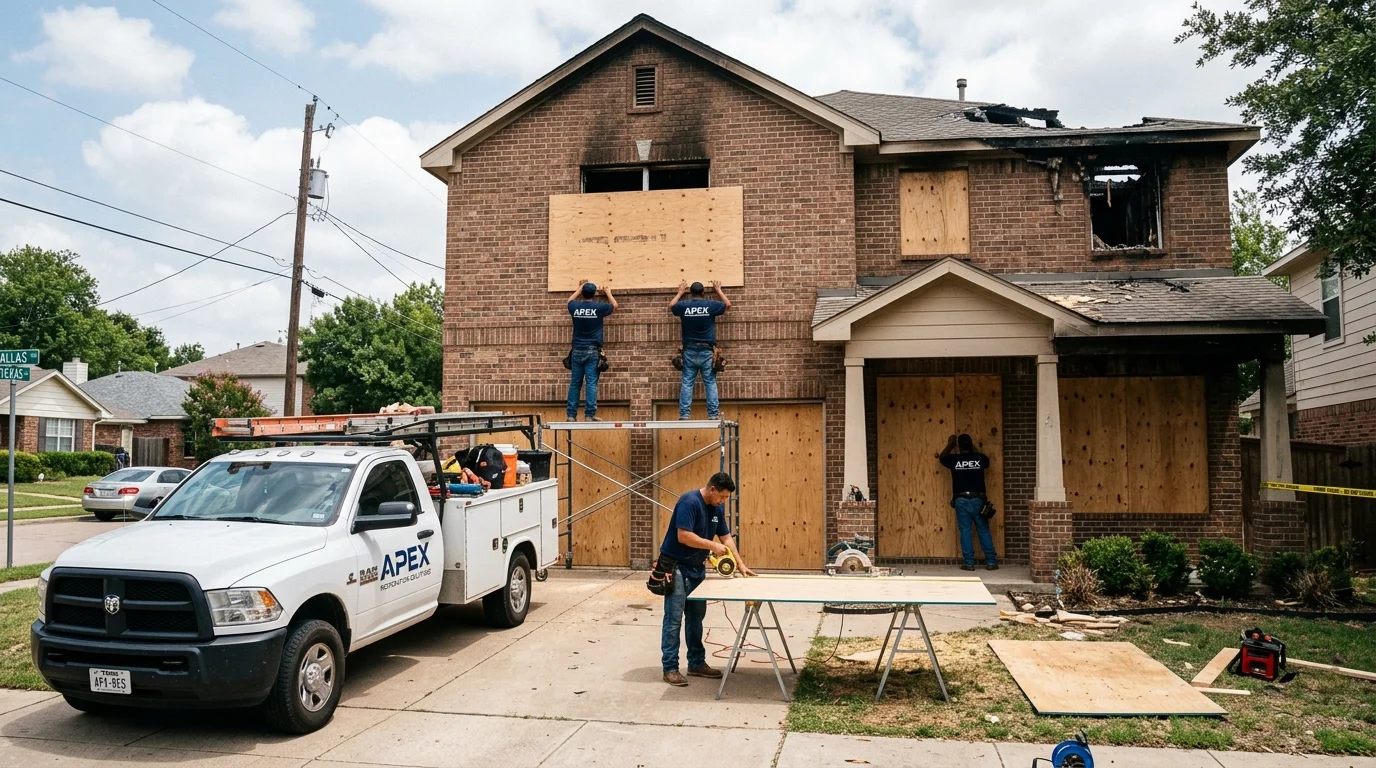
Dallas Firefighting Water Extraction & Drying Desk
IICRC certified water extraction specialists & structural psychrometric drying crews deployed across Dallas County.
Tactical Restoration After Heavy Fire Attack Lines
Recovering a property after thousands of gallons of hose-line suppression requires methodical physical de-watering and targeted structural access:
1. Bulk Standing Water Extraction
Truck-mounted PTO extraction units pull continuous high-vacuum suction through 2-inch industrial vacuum hoses, while submersible trash pumps de-water flooded crawlspaces and basements.
2. Saturated Insulation & Gypsum Board Removal
High-powered exterior vacuums extract soaked attic cellulose and fiberglass, while water-wicked drywall is cut back above the moisture line to expose soaked framing.
3. Structural Sill Plate & Bottom Track Drying
Specialized injector drying systems force heated, dry air directly into bottom plate cavities under pressure, preventing wood-decay fungi from rotting sill plates.
4. Antimicrobial Washdown of Framing
All exposed framing lumber undergoes an intensive washdown with EPA-registered botanical or quaternary ammonium biocides, preventing mold growth and neutralizing smoke odors.
Drying Heavy Structural Timber vs. Modern Engineered Trusses
Drying requirements vary significantly depending on the age and construction of the Dallas structure:
Solid Dimensional Lumber (2x4 / 2x6 Framing)
Absorbs water into outer cellular layers; retains structural core integrity if dried within 72 hours using axial air movers and LGR dehumidification.
Engineered I-Joists & LVL Beams
OSB webs swell rapidly and lose stiffness when soaked, requiring precision moisture monitoring and engineer evaluation if deflection occurs.
Concrete Slabs on Grade
Absorbs massive liquid volumes, requiring deep desiccant drying and continuous ASTM F2170 relative humidity probe tracking.
Frequently Asked Questions
How long does it take to dry out a house after fire hose water damage?
Under professional IICRC drying protocols utilizing industrial LGR dehumidifiers and high-velocity air movers, complete structural drying typically takes between 3 and 7 days. Heavy multi-layer assemblies, saturated subflooring, or dense concrete slabs may require 7 to 10 days of continuous desiccant dehumidification.
What happens if firefighting water gets into the crawlspace?
Suppression water draining into dark, unconditioned crawlspaces creates severe fungal hazards that can rot floor joists and warp hardwood floors above. Our crews pump out standing water, remove saturated ground vapor barriers, deploy commercial crawlspace drying fans, and apply antimicrobial treatments to joists and beams.
How do you track moisture hidden inside walls?
We use non-invasive FLIR infrared thermal imaging cameras to identify temperature anomalies created by evaporating moisture, combined with non-destructive radio frequency moisture meters and deep-wall insulated pin probes that measure exact moisture content deep inside wood framing.
Related Suppression Water & Drying Solutions
Suppression water extraction and structural drying overview.
Commercial and residential sprinkler deluge water remediation.
Infrared thermal imaging moisture mapping and dry standards.
Psychrometric LGR and desiccant structural dehumidification.
Available Across All 51 Dallas ZIP Codes
Our emergency response and restoration specialists deploy 24/7 across every Dallas County neighborhood. Select your local district below for localized response details:
Fire Recovery & Technical Insights
What to Do in the First 24 Hours After a House Fire
Critical safety, insurance notification, and board-up steps once fire officials release the scene.
Understanding Smoke and Soot Types: Wet, Dry & Protein
Why household cleaning smears acidic soot and how chemical counteractants stop etching.
Navigating Fire Damage Insurance Claims
How Xactimate line-item estimates, ACV vs RCV, and Texas building ordinance coverage work.