Ventilation Cleaning After Fire in Dallas, TX
Ventilation terminals—including supply registers, return air grilles, ceiling linear diffusers, bathroom exhaust fans, and kitchen range hoods—serve as the immediate boundary between a building's mechanical air network and its occupied rooms. During a fire, heated smoke concentrates heavily around these ceiling and wall openings.
If these terminals are not removed and decontaminated, they serve as persistent odor generators and soot distributors. Every time air flows through the louvered slats, friction dislodges dried soot particles, staining adjacent ceiling drywall with unsightly dark rings (ghosting) and degrading indoor air quality.
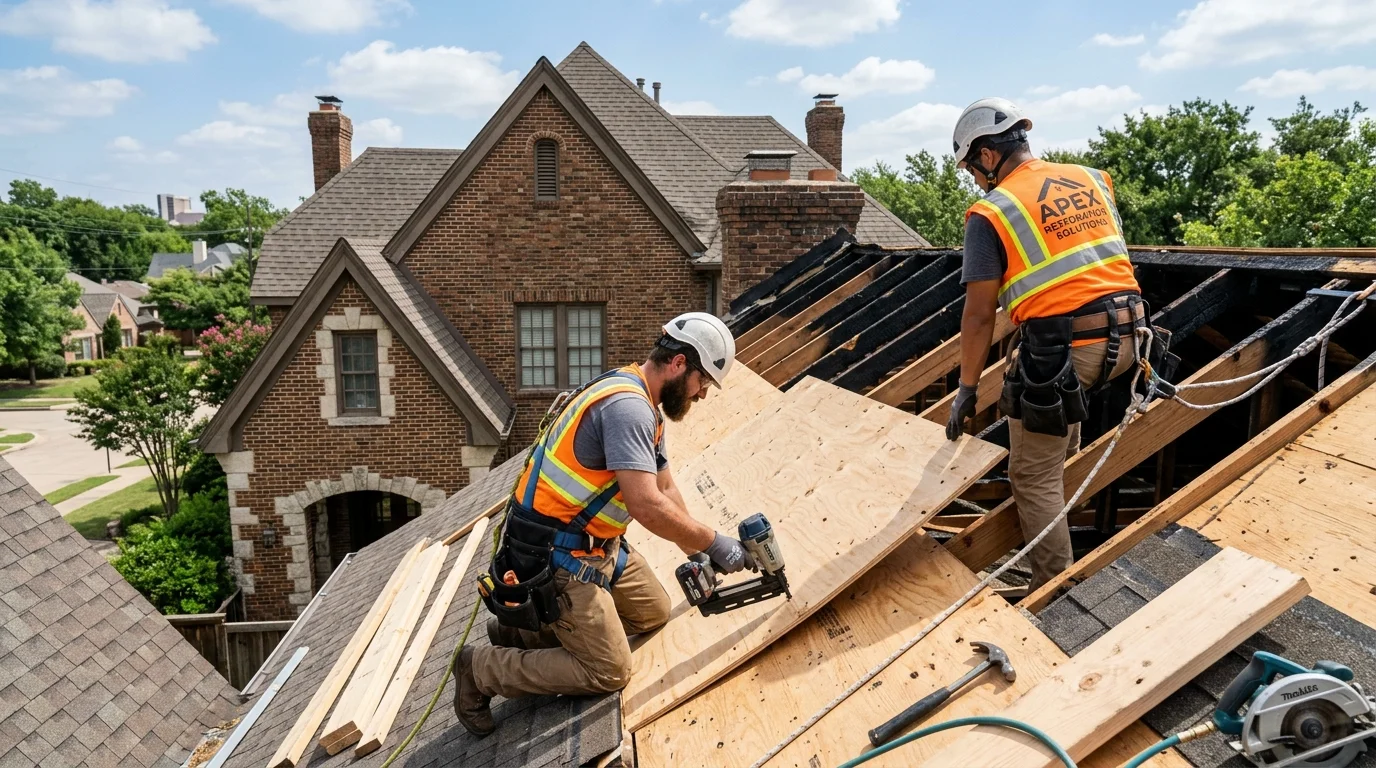
Dallas HVAC & Air Quality Restoration Desk
NADCA certified ventilation mechanics & environmental air quality specialists deployed across Dallas County.
Detailed Terminal Restoration Procedures
Cleaning ventilation components requires careful dismounting and individual restoration rather than superficial wiping in place:
Register & Diffuser Extraction & Tagging
All supply registers, return air grilles, and linear diffusers are meticulously unfastened, tagged by room location, and prepped for off-site or mobile immersion cleaning.
Ultrasonic Immersion Cleaning
High-frequency ultrasonic tanks create cavitation bubbles that gently strip microscopic soot particles from intricate damper gears, springs, and louver slats without scratching factory powder-coat finishes.
Alkaline De-Greasing Wash Baths
Heavy commercial steel diffusers are soaked in biodegradable, non-butyl alkaline wash baths that dissolve greasy hydrocarbon films, followed by pure water rinsing and heated drying.
Damper Mechanism Re-Lubrication
Technicians apply synthetic dry-film PTFE lubricants to all pivot points and adjustment levers, restoring smooth, squeak-free airflow balancing.
Duct Boot Mastic Resealing
Technicians HEPA vacuum boot collars and seal perimeter gaps between drywall and metal duct boots using fiber-reinforced UL-181 listed water-based duct mastic.
Auxiliary Exhaust System Decontamination
Ventilation restoration extends beyond central forced-air systems to encompass dedicated local exhaust networks:
Bathroom Exhaust Fans
Motor housings are dismantled, centrifugal fan blades washed, backdraft dampers cleared, and flexible exhaust runs vacuumed through the exterior roof cap.
Dryer Exhaust Ducts
Metal exhaust pipes are cleared of soot-coated lint buildup using rotary brush systems, eliminating major secondary fire hazards.
Fresh Air Intakes & Economizers
Exterior air intake louvers and commercial rooftop economizer screens are power-washed and fitted with fresh pre-filters.
Frequently Asked Questions
Why do dark rings form around ceiling air vents after a fire?
Dark halos or rings around ceiling registers (known as ghosting) occur when temperature differentials cause microscopic soot particles to plate out onto drywall. Additionally, unsealed gaps around duct boots draw attic soot down through ceiling penetrations via the Venturi effect. Mastic sealing of duct boots permanently resolves this.
Can bathroom exhaust fans run after a fire?
Bathroom exhaust fans should not be operated until their blower wheels, motor housings, and backdraft dampers have been inspected and cleaned. Soot deposits inside the electric motor can cause motor friction, overheating, and potential motor burnout.
How do you clean custom architectural wooden return grilles?
Custom wood return grilles common in luxury Dallas estates cannot be submerged in chemical tanks. We clean custom wood grilles using dry chemical sponge erasers, followed by specialized citrus-based wood restorers and pigmented shellac odor sealants, preserving the fine craftsmanship while eliminating smoke odor.
Related HVAC & Air Quality Solutions
Mechanical decontamination and IAQ clearance overview.
Negative-air duct cleaning and source soot extraction.
Air handler cabinet washdown and damper restoration.
Continuous industrial True HEPA air scrubbing and carbon chemisorption.
Available Across All 51 Dallas ZIP Codes
Our emergency response and restoration specialists deploy 24/7 across every Dallas County neighborhood. Select your local district below for localized response details:
Fire Recovery & Technical Insights
What to Do in the First 24 Hours After a House Fire
Critical safety, insurance notification, and board-up steps once fire officials release the scene.
Understanding Smoke and Soot Types: Wet, Dry & Protein
Why household cleaning smears acidic soot and how chemical counteractants stop etching.
Navigating Fire Damage Insurance Claims
How Xactimate line-item estimates, ACV vs RCV, and Texas building ordinance coverage work.