Ash Cleanup in Dallas, TX
Following an extinguished structural fire, layers of fine, caustic ash blanket horizontal surfaces, settle deep into wall plates, and pack floor joist spaces. Combustion ash consists of heavily oxidized carbon, alkaline mineral salts, pulverized synthetic plastics, and fiberglass particles. In North Texas's humid climate, moisture transforms dry ash into a highly corrosive slurry that chemically attacks metal pipes, pits polished stone, and creates serious respiratory hazards for occupants and tradesmen.
Our Dallas-based restoration teams provide systematic ash extraction and industrial HEPA vacuuming across all 51 Dallas ZIP codes. We remove bulk ash mounds and microscopic dust layers using commercial negative-air containment and multi-stage filtration equipment. By extracting caustic ash deposits before moisture accelerates chemical corrosion, our crews protect your building's remaining structural elements and pave the way for safe, effective surface remediation.
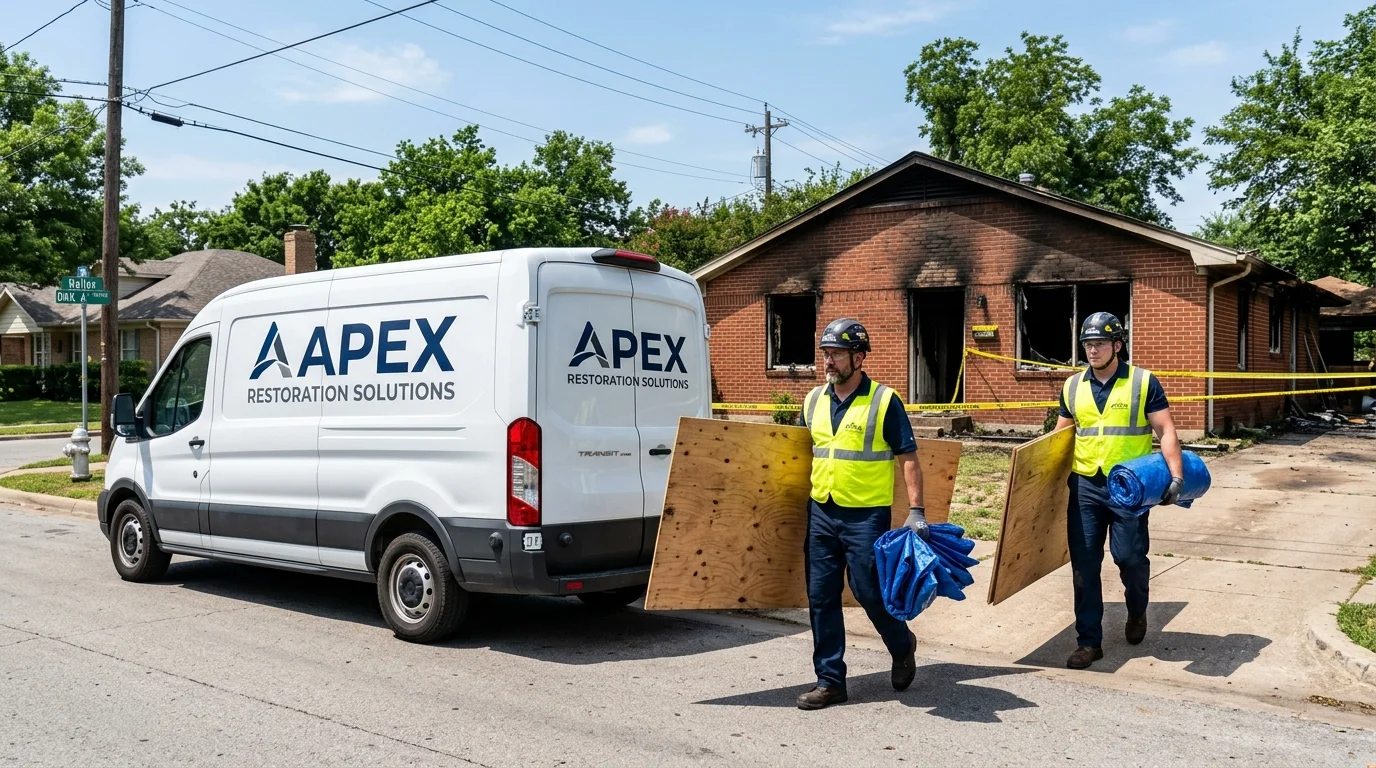
Dallas Debris & Cleanup Dispatch
Heavy-duty equipment & roll-off container mobilization across all 51 Dallas ZIP codes.
What Does Professional Post-Fire Ash Cleanup Involve?
Standard household vacuums and standard shop-vacs cannot handle fire ash—their porous exhaust filters blow fine toxic particles straight back into the room. Professional ash extraction utilizes industrial equipment and a disciplined four-stage protocol:
Stage 1: Negative Air Containment & Engineering Controls
Before disturbing settled ash, technicians isolate the work area with 6-mil plastic barriers and place rooms under negative air pressure using HEPA air filtration scrubbers.
Stage 2: Bulk Dry Ash Shoveling & Collection
Thick layers of ash—often several inches deep on floors, collapsed ceiling surfaces, and attic decking—are carefully gathered using non-sparking hand tools and heavy-duty disposal bags to minimize airborne dust clouds.
Stage 3: Multi-Stage HEPA Vacuum Extraction
Industrial collection vacuums equipped with certified 99.97% HEPA filters at 0.3 microns extract settled ash from delicate framing nooks, bottom sill plates, electrical junction enclosures, and joist pockets.
Stage 4: Structural Cavity & Stud Bay Clearing
Technicians systematically vacuum between studs, behind baseboards, and within plumbing chases to ensure no caustic ash deposits remain hidden inside structural cavities.
Ash Extraction vs. Chemical Soot Washing
Distinguishing between bulk ash extraction and technical soot washing ensures proper resource allocation throughout your restoration process:
Ash Cleanup (Physical Removal)
Targets bulk dry carbon ash, mineral residues, and heavy particulate fallout.
Executed with HEPA vacuums, collection scoops, and heavy disposal bagging.
Clears loose bulk particulate so finished surfaces can subsequently be washed.
Soot Removal (Chemical Remediation)
Targets oily, acidic combustion films chemically bonded to finished surfaces.
Executed with vulcanized dry chemical rubber sponges and alkaline washes.
Removes deep staining and neutralizes odor on salvageable building materials.
Why Caustic Fire Ash Must Be Removed Immediately
Allowing fire ash to sit inside a Dallas property triggers severe chemical degradation and indoor air quality hazards:
Alkaline Chemical Etching
When ash absorbs atmospheric moisture or residual firefighting water, calcium oxide and potassium salts in the ash form alkaline solutions with pH levels exceeding 10. These caustic compounds permanently pit marble, corrode copper plumbing lines, and etch aluminum window frames.
Respiratory Health Hazards
Disturbed ash releases fine inhalable particulates (PM2.5) containing polycyclic aromatic hydrocarbons (PAHs), heavy metals, and silica that irritate lungs and cause severe respiratory distress.
Pervasive Odor Circulation
Thick ash layers trap unburned volatile organic compounds. As warm Texas air circulates through the property, dry ash continuously releases noxious smoke odors that penetrate adjoining rooms.
Mechanical Jamming of Hardware
Fine abrasive ash particles infiltrate sliding door tracks, window balances, lock cylinders, and appliance hinges, causing mechanical binding and permanent abrasion.
Frequently Asked Questions
Why can't I clean up fire ash using my regular home vacuum?
Standard household and commercial shop vacuums lack the ultra-fine HEPA filtration required to trap microscopic ash. Their exhaust blows fine carbon, soot, and chemical particles back into the air, drastically worsening indoor air contamination and spreading soot throughout your home.
Is the ash left after a house fire toxic?
Yes. Modern homes are filled with synthetic materials, plastics, treated wood, and electronic components. When these burn, the resulting ash contains heavy metals, dioxins, formaldehyde, and caustic alkaline salts that require certified personal protective equipment (PPE) to handle safely.
How do you keep fine ash from spreading to unburned rooms during cleanup?
We establish containment barriers with zippered airlock chambers and run HEPA-filtered air scrubbers under negative pressure. This draws air inward toward the contaminated area, preventing airborne ash from escaping into clean rooms.
Does ash cleanup include cleaning the air ducts?
Ash cleanup focuses on extracting settled ash from floors, framing, and building cavities. Specialized HVAC and mechanical ductwork decontamination is handled as a separate technical phase (Block 8) using mechanical rotary brushes and containment vacuums.
Related Debris, Ash & Cleanup Solutions
Overview of comprehensive post-fire cleanup services in Dallas.
Bulk extraction of collapsed drywall, insulation, and fire rubble.
Surgical cutout of burned studs, trim, and structural framing.
Chemical sponge wipe-down and technical surface soot removal.
Available Across All 51 Dallas ZIP Codes
Our emergency response and restoration specialists deploy 24/7 across every Dallas County neighborhood. Select your local district below for localized response details:
Fire Recovery & Technical Insights
What to Do in the First 24 Hours After a House Fire
Critical safety, insurance notification, and board-up steps once fire officials release the scene.
Understanding Smoke and Soot Types: Wet, Dry & Protein
Why household cleaning smears acidic soot and how chemical counteractants stop etching.
Navigating Fire Damage Insurance Claims
How Xactimate line-item estimates, ACV vs RCV, and Texas building ordinance coverage work.